
Start with the operator’s requirements
Search for airport architectural photography in Japan and the results will show photographers and portfolios. Availability matters, but so do the particular airport operator’s rules for the proposed location, time, people and equipment.
Those requirements vary by operator and by area within a facility. Some work may follow ordinary visitor arrangements; other work may require advance registration, an escort, a separate permit or additional conditions. Confirm the route with the operator rather than transferring the process from another airport or another project.
Our public Kansai International Airport project account shows the finished work. This guide focuses on the questions a client can ask without exposing private access or security procedures.
Confirm whether attendees must be registered individually
An operator may require attendees to be registered individually, but the information requested and the approval route are site-specific. Ask for the operator’s current instructions and share personal information only through its designated process.
Three consequences follow, and they are worth writing into the brief.
Confirm the team early. If advance registration applies, a later change may require an update or a new approval. Ask before adding anyone.
Keep the footprint appropriate. A single photographer working from a tripod is often sufficient for architectural stills and can reduce disruption, but the operator decides what is acceptable for that location.
Name the site contact. Ask the operator who must submit any request and who communicates the result. Do not assume that the photographer, client or contractor has authority to do it.
Plan the lead time backwards from the permit, not forwards from the brief
If the operator requires advance permission, its stated lead time—not the photographer’s calendar—sets the earliest reliable date. The timing can differ by airport, terminal, area and scope, so obtain it directly before promising a shoot date.
Work backwards from the operator’s deadline. Allow time for clarifications, finalise the required attendee and equipment information, and keep the proposed date provisional until the responsible party confirms access.
Let the operator define the photographic boundaries
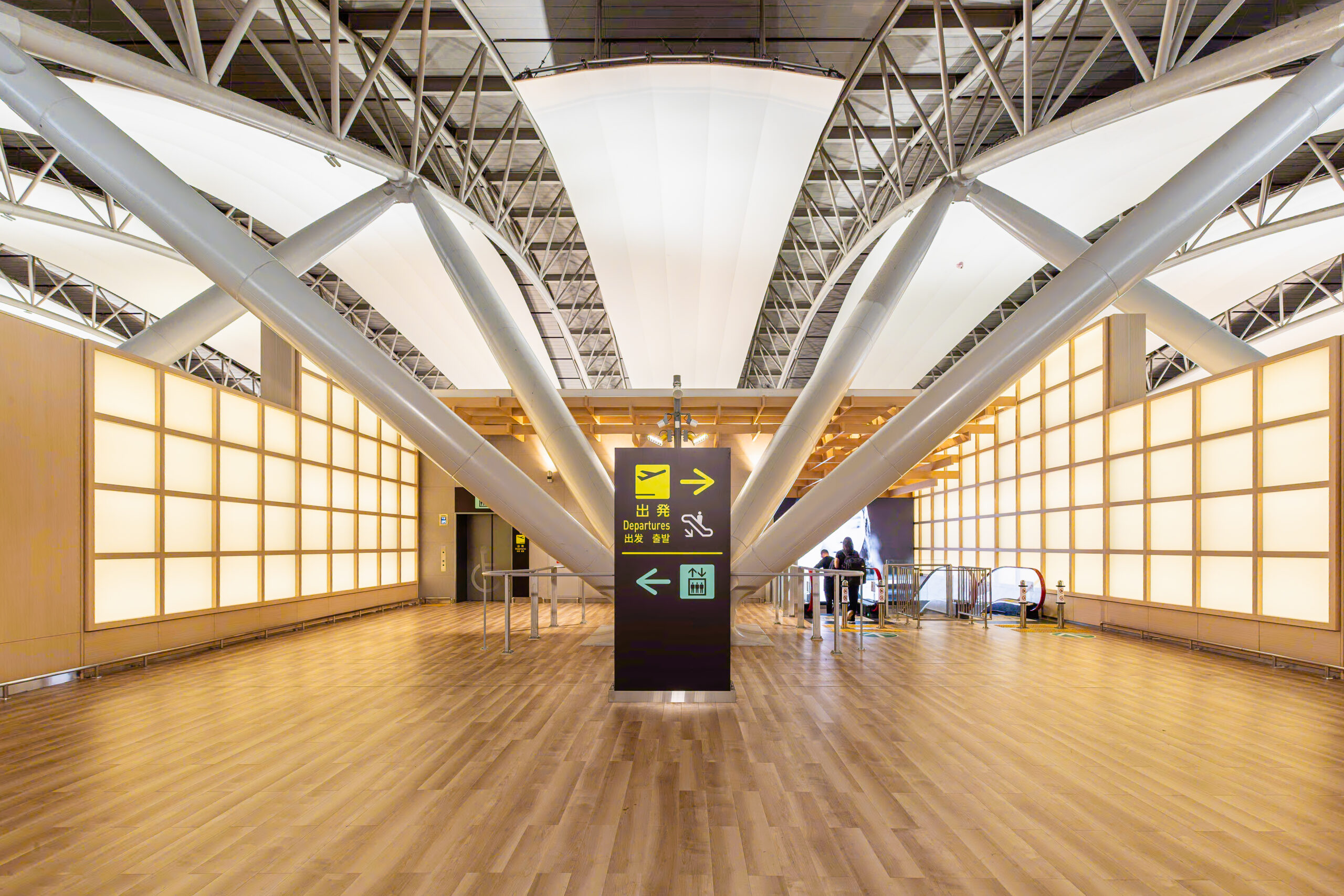
An airport operator may restrict locations, subjects, viewpoints, equipment or times. The boundary may be operationally sensitive and should not be reconstructed from another commission. Ask for the rules that apply to the planned shoot, keep any restricted information out of public briefs, and build the shot list within the confirmed boundary.
Under Japan’s Civil Aeronautics Act, drone flight in airspace around airports is prohibited in principle. Flying there requires the applicable flight permit or approval, as well as prior coordination with both the airport administrator and the air traffic control authority responsible for that airspace. The Ministry of Land, Infrastructure, Transport and Tourism advises submitting applications at least ten business days before the planned flight and allowing additional time for corrections.
If aerials are essential, raise them at the start and confirm the current process with the relevant authorities and operator. If they are optional, prepare a ground-based alternative rather than making the whole brief depend on approval.
Confirm whether image review is required
An operator, site-access agreement or commissioning contract may require selected images to be reviewed before use. Separately, a client and photographer may agree an announcement date or limits on portfolio publication. Neither condition should be assumed; ask whether it applies and record the answer in writing.
Site or brand review is not the same as copyright ownership or a usage licence. State who conducts any review, what they review, who receives a licence, when each party may publish and how portfolio use will be handled.
Working inside a live facility
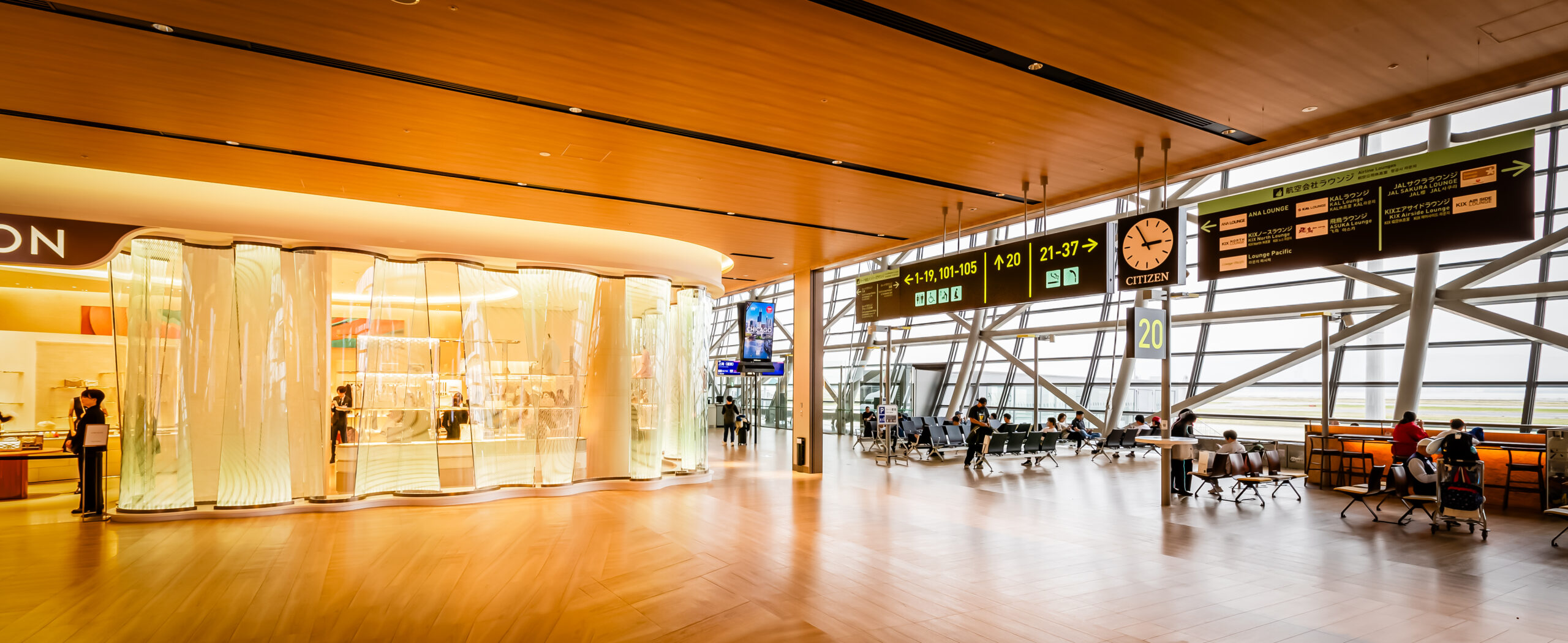
When photography takes place during airport operations, confirm whether an escort, site induction, personal protective equipment or limits on identifiable people apply to the proposed area. The operator’s written requirements are the source of truth.
The practical effect is that a booked window is not a shooting window. Build the running order so the frames that need an empty space are made in the quietest period the operator will grant, and put the frames that tolerate activity in the rest.
How to brief an airport shoot in Japan
Lead with the operator contact, not a promised date. Ask which process applies, who files, what lead time is required, and when the attendee and equipment lists must be final. Obtain the photographic boundaries before writing the shot list. Say whether aerials are essential or optional. Agree any review and publication terms alongside the fee, and use the operator’s confirmed quiet window rather than guessing from the public timetable.
Working with Daisho Photography
Daisho Photography is an Osaka-based architectural and interior photography practice working across Japan. Publicly documented work includes Kansai International Airport for Populous, the Belgian Pavilion at Expo 2025 Osaka for Delta Light, and the German Pavilion at Expo 2025 Osaka. For architectural stills, we can work as a single photographer from a tripod with bracketed exposures when that scope suits the site.
Standard retouching and a standard usage licence are included in the session fee. Travel, special equipment, exclusive or perpetual usage rights, and advanced editing are quoted separately. The quote records the agreed users, uses and licence terms before the shoot.
Tell us the facility, intended uses and operator contact, and we will define a scope around the confirmed requirements. Current options are listed on our photography services and pricing page.